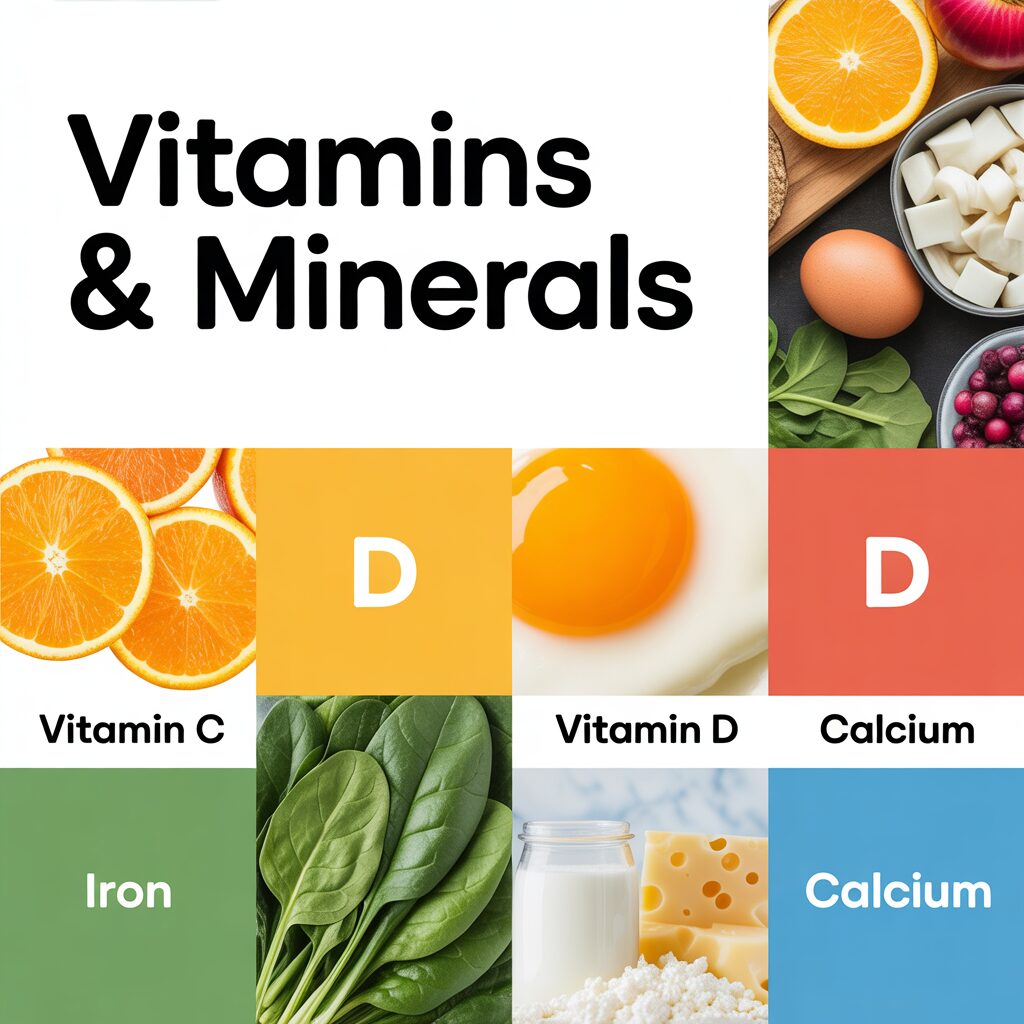
Canadian Vitamins & Minerals – Quick Reference
RDA/AI and UL for healthy adults (general guidance). Use to fill gaps — not to replace a balanced diet.
Vitamins
| Vitamin | Main role(s) | Adult RDA / AI (typical) | UL | Supplement notes |
|---|---|---|---|---|
| Vitamin D | Bone health (Ca/P absorption), immune support | 600 IU (15 µg) ages 19–70; 800 IU (20 µg) >70 | 4,000 IU/day (100 µg) | Commonly low in Canada; take with a meal containing fat; track total intake from fortified foods. |
| Vitamin B12 | Nerve function, red blood cells, DNA synthesis | 2.4 µg | None established | Vegetarians/vegans & older adults often need supplements; consider sublingual or injections if absorption issues. |
| Folate (B9) | Cell division, DNA synthesis | 400 µg DFE | 1,000 µg/day (synthetic folic acid) | Anyone who could become pregnant: 400 µg folic acid daily. Monitor fortified foods. |
| Vitamin C | Antioxidant; supports immune function; iron absorption | 90 mg (men); 75 mg (women) | 2,000 mg/day | Smokers need +35 mg/day. High doses may cause GI upset. |
| Vitamin A | Vision, immune function, cell differentiation | 900 µg RAE (men); 700 µg RAE (women) | 3,000 µg RAE/day | Excess preformed vitamin A can be toxic. Beta-carotene is safer but not 1:1. |
| Vitamin E | Antioxidant (cell membrane protection) | 15 mg (α-tocopherol) | 1,000 mg/day | Use cautiously with anticoagulants; food sources often adequate. |
| Vitamin K | Blood clotting; bone metabolism | AI ~120 µg (men); 90 µg (women) | Not established | Keep intake consistent if on warfarin; consult clinician before changes. |
Minerals
| Mineral | Main role(s) | Adult RDA / AI (typical) | UL | Supplement notes |
|---|---|---|---|---|
| Zinc | Immune function, wound healing, taste/smell, DNA synthesis | 11 mg (men); 8 mg (women) | 40 mg/day | Long-term >40 mg can cause copper deficiency. Vegetarians absorb less; avoid zinc nasal sprays. |
| Iron | Oxygen transport (hemoglobin/myoglobin) | 8 mg (men); 18 mg (women 19–50) | 45 mg/day | Supplement only if needed; excess is harmful. Take away from calcium, coffee/tea. |
| Magnesium | Muscle/nerve function, bone, energy metabolism | ~400–420 mg (men); 310–320 mg (women) | 350 mg/day (supplemental only) | Citrate/glycinate are gentler; may aid sleep/muscle tension. Mind GI tolerance. |
| Calcium | Bone/teeth, muscle contraction, nerve signaling | 1,000 mg (19–50); 1,200 mg (>50) | 2,500 mg/day | Absorption best ≤500 mg per dose; pair with vitamin D. Track diet+supplement total. |
| Selenium | Thyroid hormone metabolism; antioxidant systems | 55 µg | 400 µg/day | Brazil nuts are potent—easy to overshoot. Avoid chronic high dosing. |
| Iodine | Thyroid hormone (T3/T4) synthesis | 150 µg | 1,100 µg/day | Ensure iodized salt if avoiding processed foods/seafood; both low and high intake impair thyroid. |
Notes: Values reflect typical Canadian DRIs for healthy adults (RDA or AI). UL applies to total intake unless noted (magnesium UL applies to supplements only).
Needs vary by age, sex, pregnancy/lactation, health status, and medications.
Sources: Health Canada Dietary Reference Intakes (vitamins & elements), Canada’s Food Guide; National Academies harmonized DRIs. Consult a clinician before starting or combining supplements.