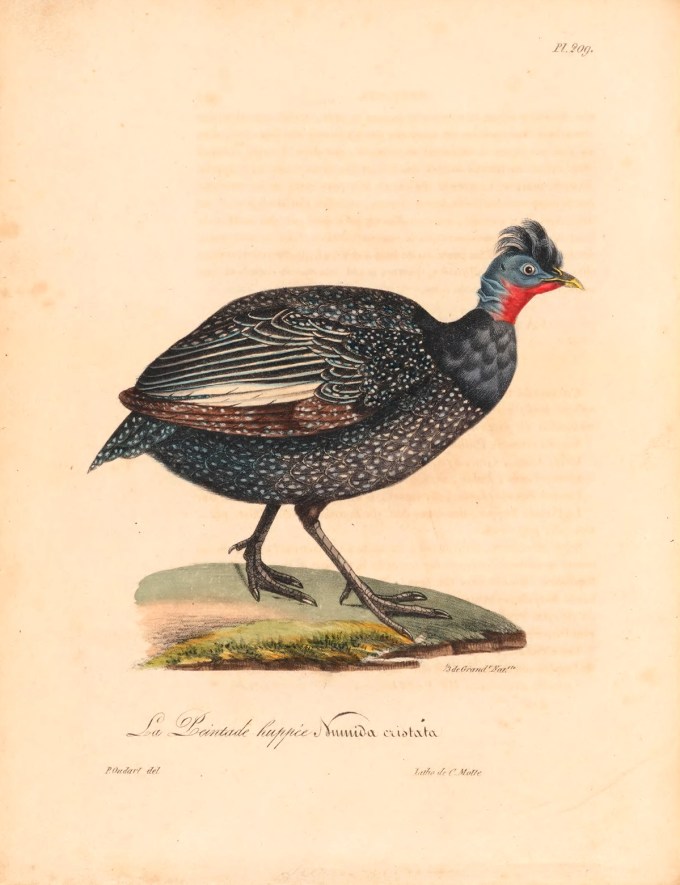
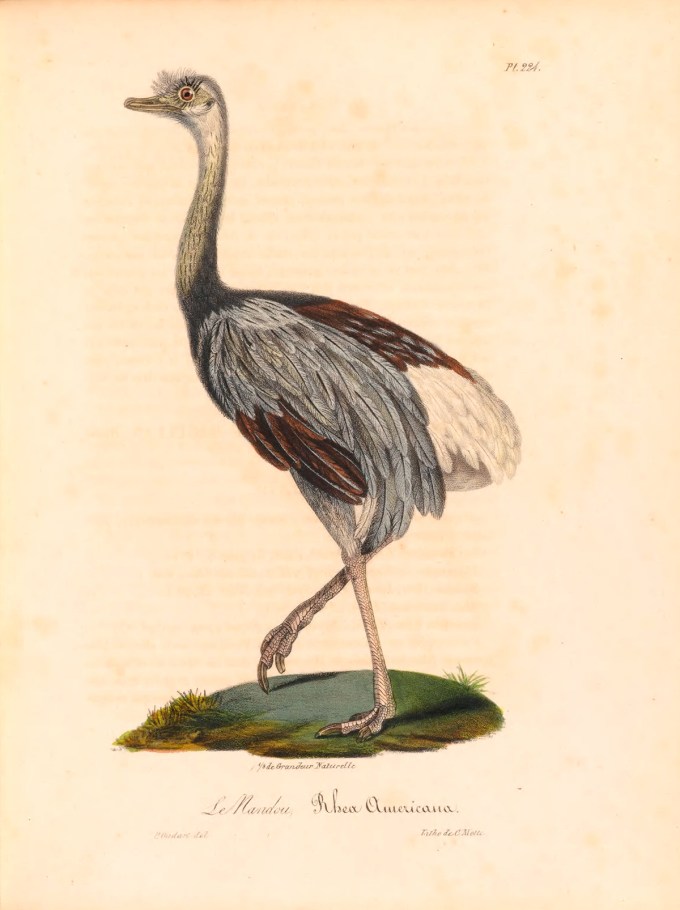
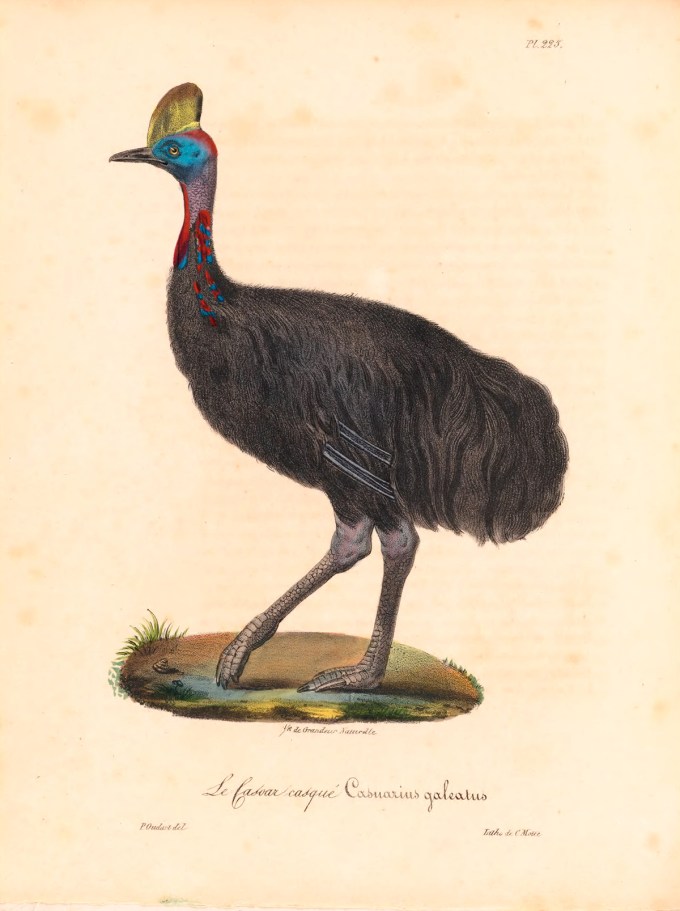
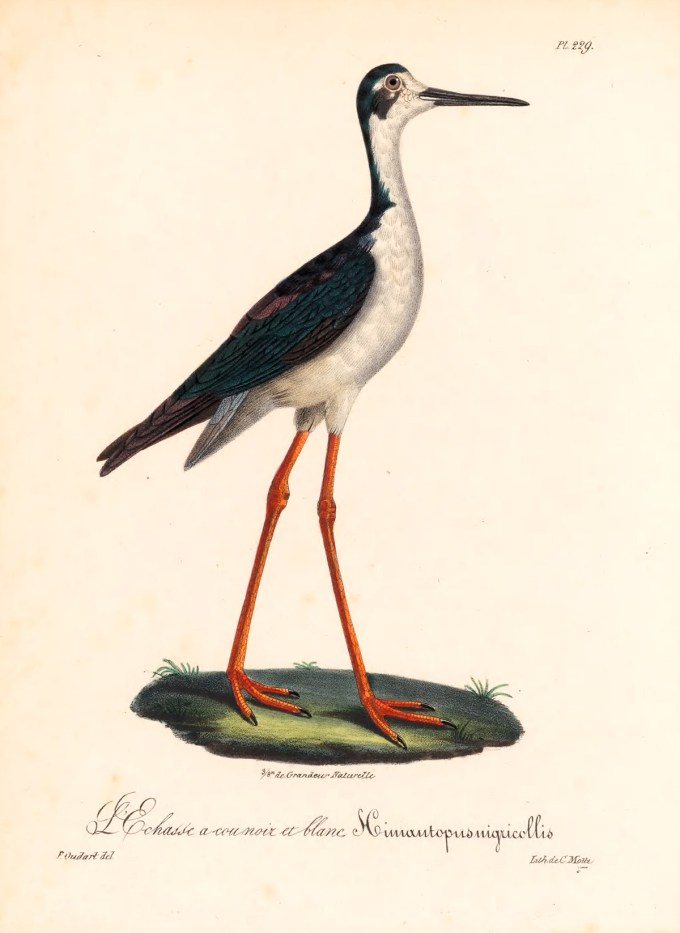
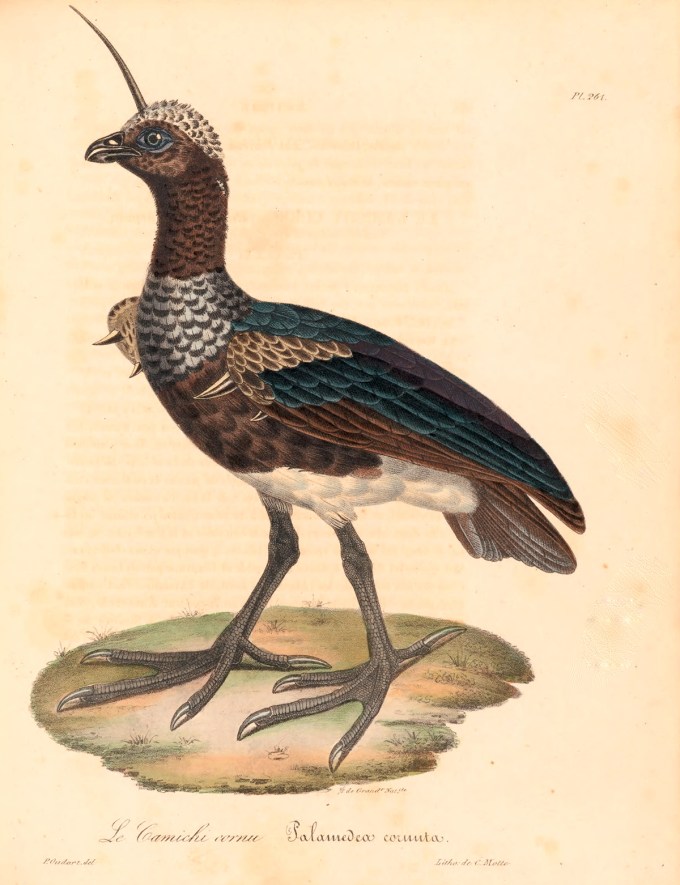
From peacocks to penguins, a winged menagerie of wonder.
By Maria Popova
“How can the bird that is born for joy sit in a cage and sing?” wrote William Blake, who lived in the golden age of the cage as entertainment. Zoos were new and exciting, and people readily overlooked their cruelty to slake their curiosity about creatures from faraway lands. But even so, zoos held only a tiny fraction of the dazzling variousness of the animal kingdom — in the age before photography, before easy global travel, the average person encountered the wondrous strangeness of animals not in the cage but on the page.
In the 1820s, a French natural history encyclopedia titled La Galerie de Oiseaux set out to bring to European eyes the most exquisite birds of North America, many of them now endangered, some extinct. Radiating from the consummate illustrations is the quiet dignity of these bright emissaries of our planet’s evolutionary history — feathered inheritors of the dinosaurs, winged with a kaleidoscope of joy.
The drift to normal | Seth’s Blog As an organization grows in scale, the idiosyncrasy and distinctiveness that was originally informed by the taste of […]
We have the chance to build something that creates connection and generates value. On the other hand, a system that diminishes agency and dignity is […]
Take good notes | Seth’s Blog Facts are important, but facts don’t create learning. Stories do. A story fits into (and changes) our understanding of […]
“My foothold is tenon’d and mortis’d in granite… and I know the amplitude of time,” wrote Walt Whitman, knowing what stone teaches about trusting time. […]