
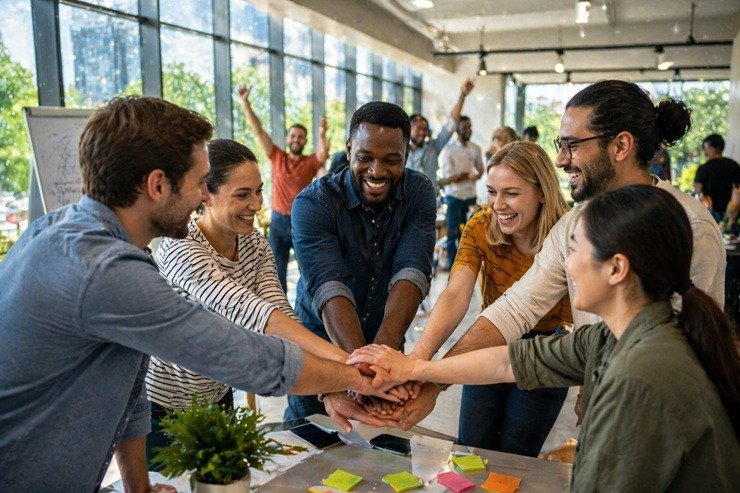
Workplace culture has always been shaped by the invisible architecture of human relationships — trust, communication, shared values, and collective identity. But in recent years, something has shifted. Organisations are no longer leaving culture to chance. They are deliberately engineering it, and corporate team building events have emerged as one of the most powerful tools in that process.
The Culture Crisis in the Modern Workplace
The post-pandemic workplace is grappling with a culture crisis. Hybrid and remote work arrangements have eroded the informal social bonds that once formed naturally in shared physical spaces. According to Microsoft’s 2023 Work Trend Index, 43% of employees feel disconnected from their organisation’s culture. A further 60% report that they lack close friendships at work — a key predictor of engagement and retention.
This disconnection has real consequences. Teams that lack cohesion are slower to make decisions, more prone to conflict, and less capable of innovation. Leaders who once relied on proximity to build culture are now searching for deliberate, scalable alternatives.
Team Building Events as Culture Architects
Corporate team building events have evolved far beyond the ropes courses and trust falls of the 1990s. Today’s most effective programmes are intentionally designed experiences that target specific cultural outcomes — whether that’s breaking down inter-departmental silos, strengthening cross-cultural communication, or accelerating the integration of newly merged teams.
The best events function as cultural microcosms. They create a temporary environment where the norms, values, and behaviours an organisation aspires to — psychological safety, transparency, collaborative problem-solving — can be practised and reinforced. Participants internalise these experiences and carry them back into their daily work lives.
Employee Engagement: The Stakes Have Never Been Higher
Employee engagement has become a boardroom-level concern. Gallup’s State of the Global Workplace report estimates that low engagement costs the global economy $8.8 trillion annually. In response, organisations are investing more strategically in experiences that connect employees to each other and to organisational purpose.
Research consistently shows that social connection at work is one of the strongest predictors of engagement. Employees who have a best friend at work are seven times more likely to be engaged in their job. Team building events accelerate the formation of these connections by creating shared memories, collaborative achievements, and the kind of informal relationships that form the bedrock of productive workplaces.
Shifting Trends in Corporate Team Building
Several macro-trends are reshaping the team building landscape. First, there is a growing emphasis on purpose-driven experiences. Organisations are moving toward events that align with corporate social responsibility goals — charity challenges, community service projects, and sustainability initiatives that build team cohesion while delivering social value.
Second, personalisation is becoming the norm. One-size-fits-all programmes are being replaced by bespoke experiences tailored to a team’s specific composition, challenges, and cultural context. Data-driven diagnostics — personality assessments, team health surveys, and 360-degree feedback — are increasingly used to design events that address real team dynamics rather than generic team needs.
Third, there is a rising demand for experiences that blend physical and digital elements. As organisations manage globally distributed teams, hybrid team building formats — combining in-person and virtual participation — are gaining traction.
The Singapore Advantage
Singapore sits at the intersection of East and West, making it a uniquely complex cultural environment for corporate teams. With a workforce drawn from dozens of nationalities and shaped by Confucian, Western, and South Asian influences, Singaporean organisations face team dynamics that require sophisticated cultural intelligence.
This is why the corporate team building sector in Singapore has developed a particularly strong depth of expertise. Local providers understand the nuances of managing hierarchy, face, and collective identity alongside Western concepts of radical candour and flat organisational structures. The result is a team building ecosystem that is among the most sophisticated in Asia.
Measuring Cultural Impact
One of the historic criticisms of team building investment has been the difficulty of measuring its impact on culture. This is changing. Progressive organisations are now using pre- and post-event culture surveys, engagement scores, and team effectiveness metrics to quantify the return on their team building investment. Early evidence is encouraging: companies that invest in regular, strategically designed team building experiences report improvements in cross-functional collaboration, faster onboarding of new employees, and higher scores on psychological safety assessments.
Culture Is a Choice
The most important insight from the evolution of corporate team building is this: culture is not something that happens to organisations. It is something organisations actively create — or fail to create. Corporate team building events are one of the most direct and powerful mechanisms available to leaders who want to shape the culture their business needs to thrive. In a world where talent is scarce, engagement is fragile, and collaboration is the engine of competitive advantage, that investment has never been more strategically important.
Related